P. G. Wodehouse (1881–1975)
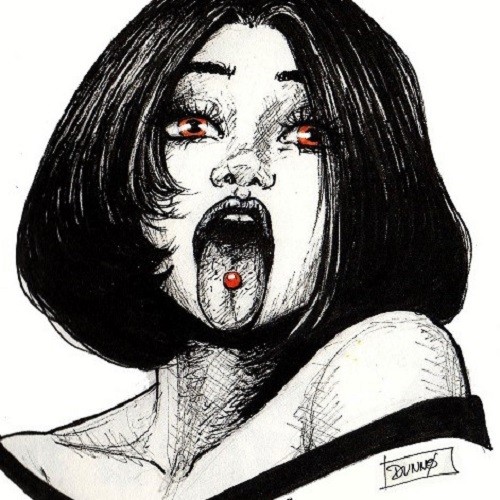
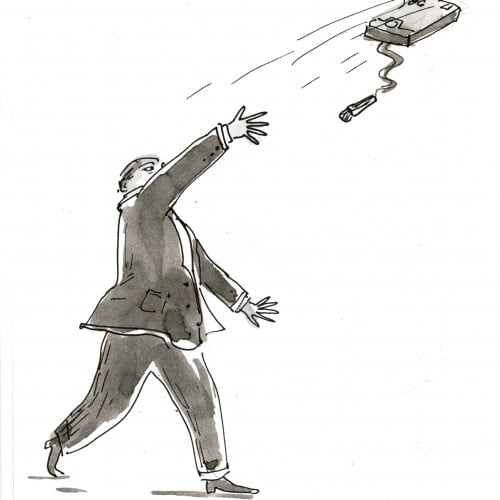
Once, when he was beginning a Wooster-Jeeves novel, he experimented with using a Dictaphone. After he had dictated the equivalent of a page, he played it back to check it over. What he heard sounded so terribly unfunny that he immediately turned off the machine and went back to his pad and pencil.
After this, according to the biographer Robert McCrum, “he might snooze a bit in his armchair, have a bath, and do some more work, before the evening cocktail (sherry for her, a lethal martini for him) at six, which they took in the sun parlour, overlooking the garden.
- From Daily Rituals: How Artists Work by Mason Currey
“He had just about enough intelligence to open his mouth when he wanted to eat, but certainly no more.”
― P.G. Wodehouse
#dailyrituals #inktober #PGWodehouse @masoncurrey
George Balanchine (1904–1983)
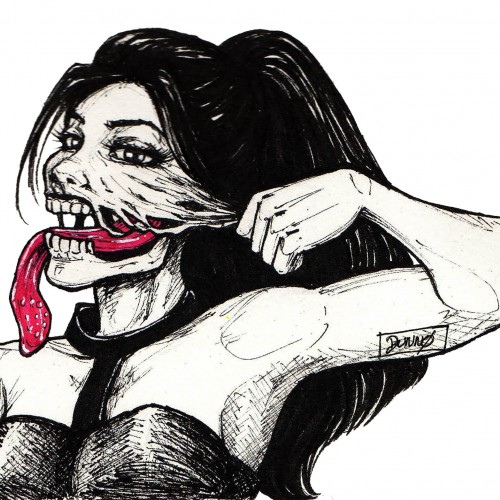
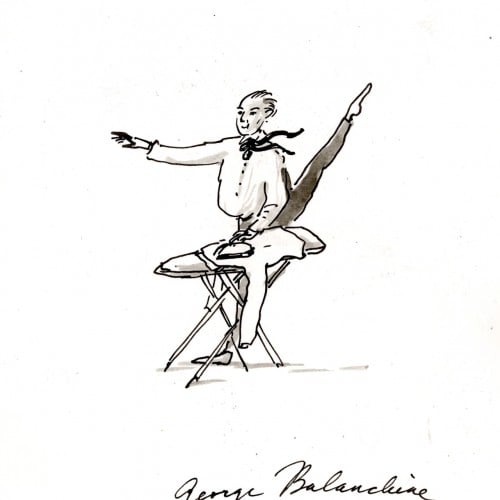
Balanchine liked to do his own laundry. “When I’m ironing, that’s when I do most of my work,” he once said. The choreographer rose early, before 6:00 A.M., made a pot of tea, and read a little or played a hand of Russian solitaire while he gathered his thoughts. Then he did his ironing for the day (he did his own washing too, in a portable machine in his Manhattan apartment) and, between 7:30 and 8:00, phoned his longtime assistant for a rundown of the day’s schedule.
- From Daily Rituals: How Artists Work by Mason Currey
“I like to do things certain ways and I disagree with everybody but I don't even want to argue.”
― George Balanchine
#dailyrituals #inktober #balanchine @masoncurrey
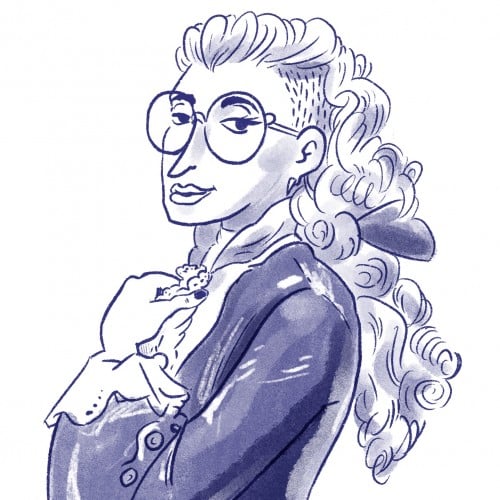
Jean-Paul Sartre (1905–1980)
By the 1950s, too much work on too little sleep—with too much wine and cigarettes—had left Sartre exhausted and on the verge of collapse. Rather than slow down, however, he turned to Corydrane, a mix of amphetamine and aspirin then fashionable among Parisian students, intellectuals, and artists (and legal in France until 1971, when it was declared toxic and taken off the market). The prescribed dose was one or two tablets in the morning and at noon. Sartre took twenty a day, beginning with his morning coffee and slowly chewing one pill after another as he worked. For each tablet, he could produce a page or two of his second major philosophical work, The Critique of Dialectical Reason.
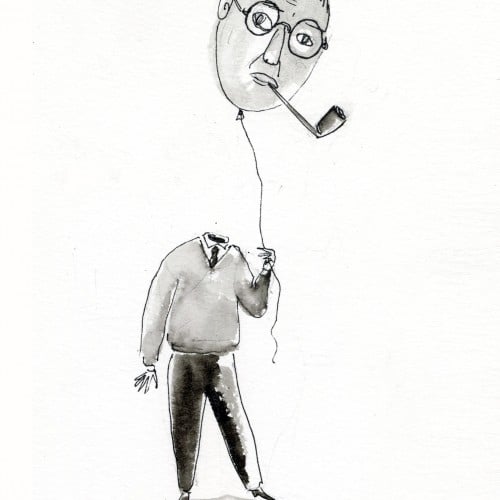
The biographer Annie Cohen-Solal reports, “His diet over a period of twenty-four hours included two packs of cigarettes and several pipes stuffed with black tobacco, more than a quart of alcohol—wine, beer, vodka, whisky, and so on—two hundred milligrams of amphetamines, fifteen grams of aspirin, several grams of barbiturates, plus coffee, tea, rich meals.”
- From Daily Rituals: How Artists Work by Mason Currey
#dailyrituals #inktober #jeanPaulSartre @masoncurrey
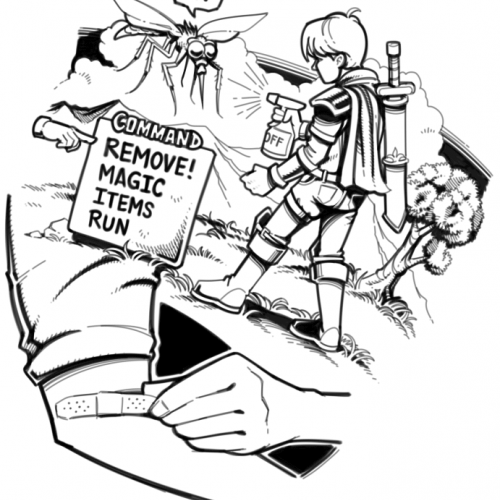
#14 Inktober 2023 Prompt number 26 "Remove" - I drew this picture during the #inktober event for an individual's artspace on magma.com (the word prompt to draw was "remove" for day 26). I came up with the idea to draw an RPG warrior battling a giant mosquito during his adventure. He is using OFF brand mosquito repellent spray to remove the enemy from this path (but he took damage and later is removing a Band-Aid from his arm). Drawn directly on magma.com live using an iPad pro (no pressure sensitivity and no Ai).
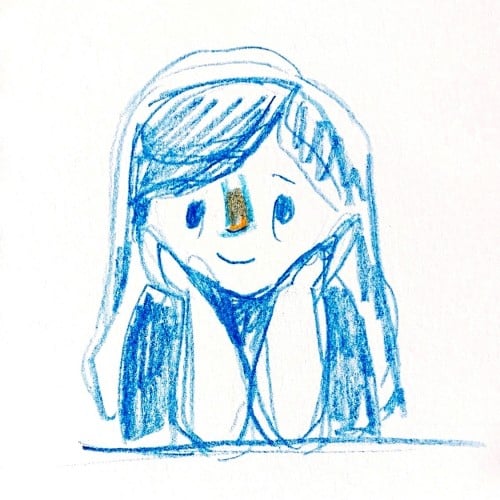
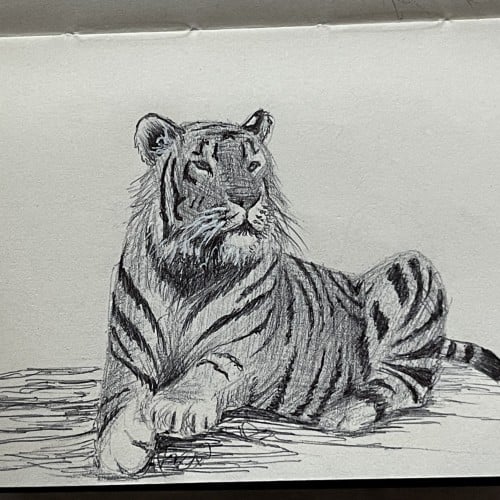
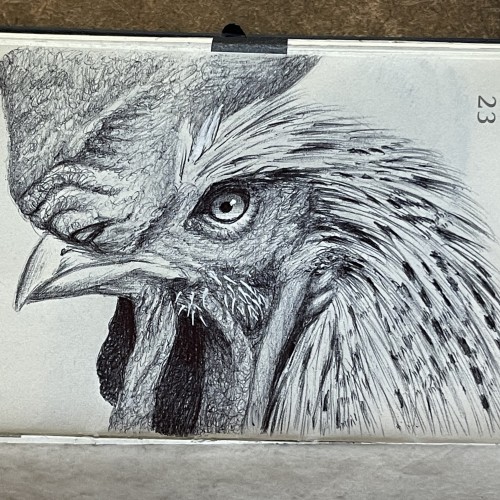
I so enjoyed the inktober and now I am going to do whatever whatever for awhile. I grabbed a sketchbook off my shelf. The paper is thin and rough - bad for ink, but so nice for pencil. Will try to switch the gears now and go with a different feeling.
Let's ouroboros together.
https://www.instagram.com/p/CVvp-ZkrX2I/?utm_source=ig_web_copy_link